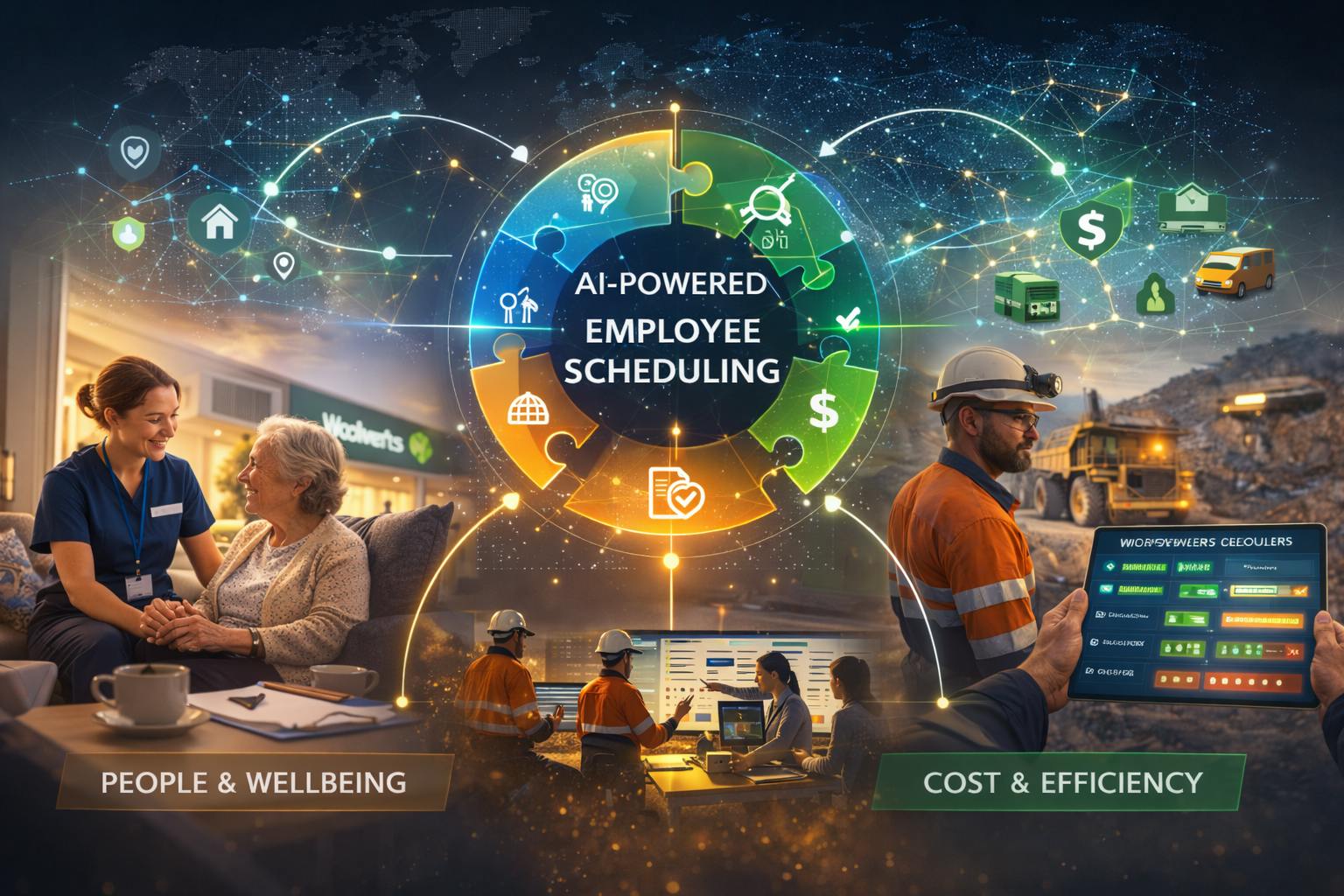
1. BaptistCare – Aligning Home Care Quality with Workforce Sustainability
BaptistCare is a leading organization for aged and home care services in Australia, with over 4,000 employees and volunteers and more than 160 service locations. Over the past six years, the demand for home care in Australia has grown at a compound annual growth rate of 15%. Baptist Care needs to balance three competing priorities in home care:
- For residents: delivering high quality, personalized experience
- For care workers: providing predictable and manageable schedules
- For organization: controlling cost and maintaining compliance
Traditional scheduling methods struggled to balance between these requirements. AI optimizes home care schedules. The optimizer considers where care workers and clients live, actively minimizes individual travel distance, and creates more predictable daily schedules.
The result is a more personal experience without adding manual workload. The optimizer reduces fatigue and improves retention, which is very important in a tight labor market.

2. Rio Tinto – Safer and More Efficient Shift Rosters in Mining
Rio Tinto is one of the leading global mining operators. They operate workforces in safety-critical environments in the mining industry where:
- Fatigue management rules are strict
- Compliance breaches are unacceptable
- Employees still expect flexibility
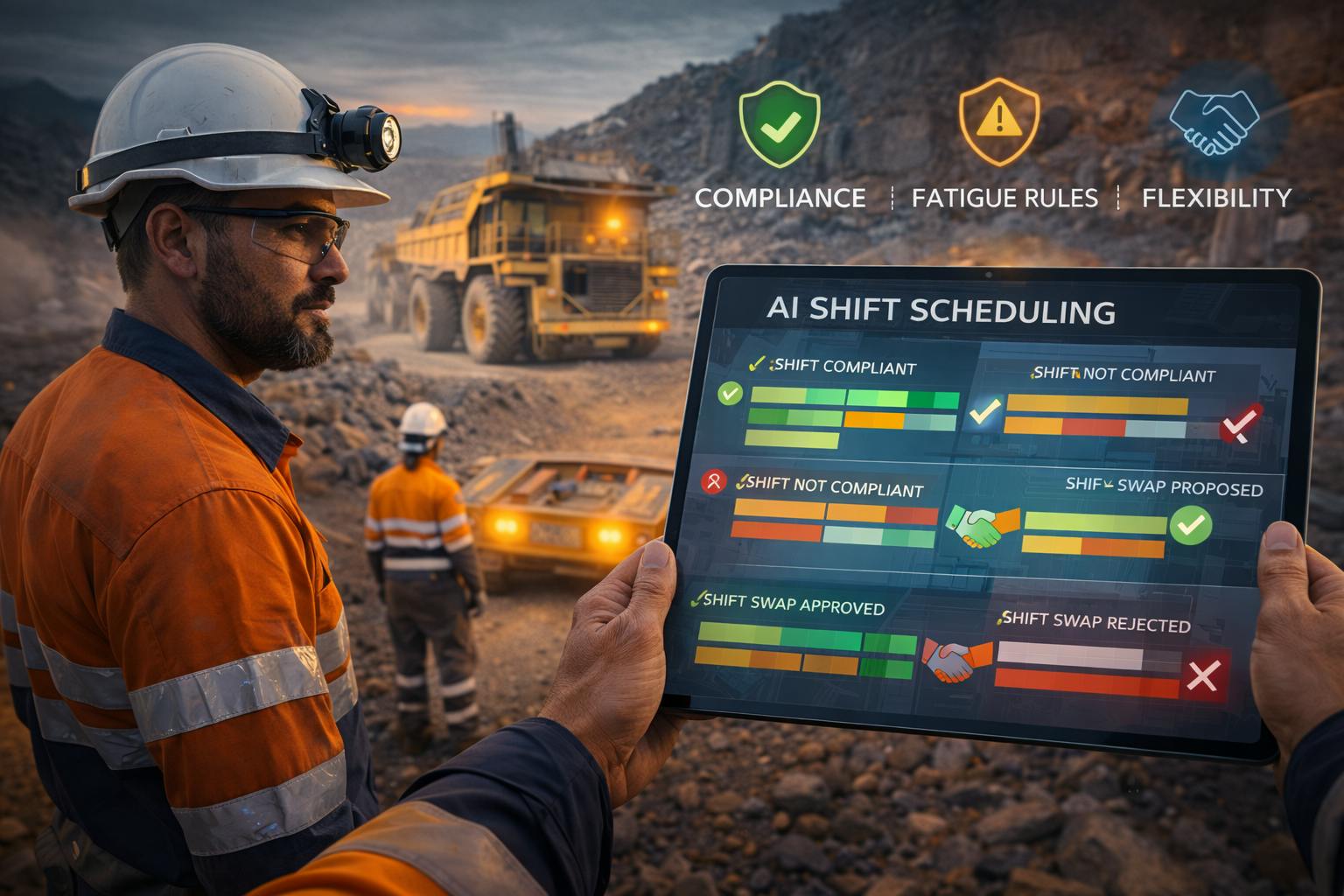
Manual scheduling limits flexibility because compliance is very difficult to check and the risks increase with complexity. Therefore, leaders default to rigid rules to mitigate risks. With a workforce scheduling system that includes AI, compliance rules are built directly into the optimizer. This means that AI-generated schedules are fatigue-compliant by design, no manual validation is required, and the risk of breaches is dramatically reduced.
Despite this regulated environment, there is still room for flexibility. For example, employees can still propose shift swaps. The system checks every swap against fatigue rules, and only compliant swaps are approved. This enables flexibility without compromising safety. As a result, employees can trust that schedules are predictable and stable.
3. Woolworths – Consumer-centric scheduling in Retail
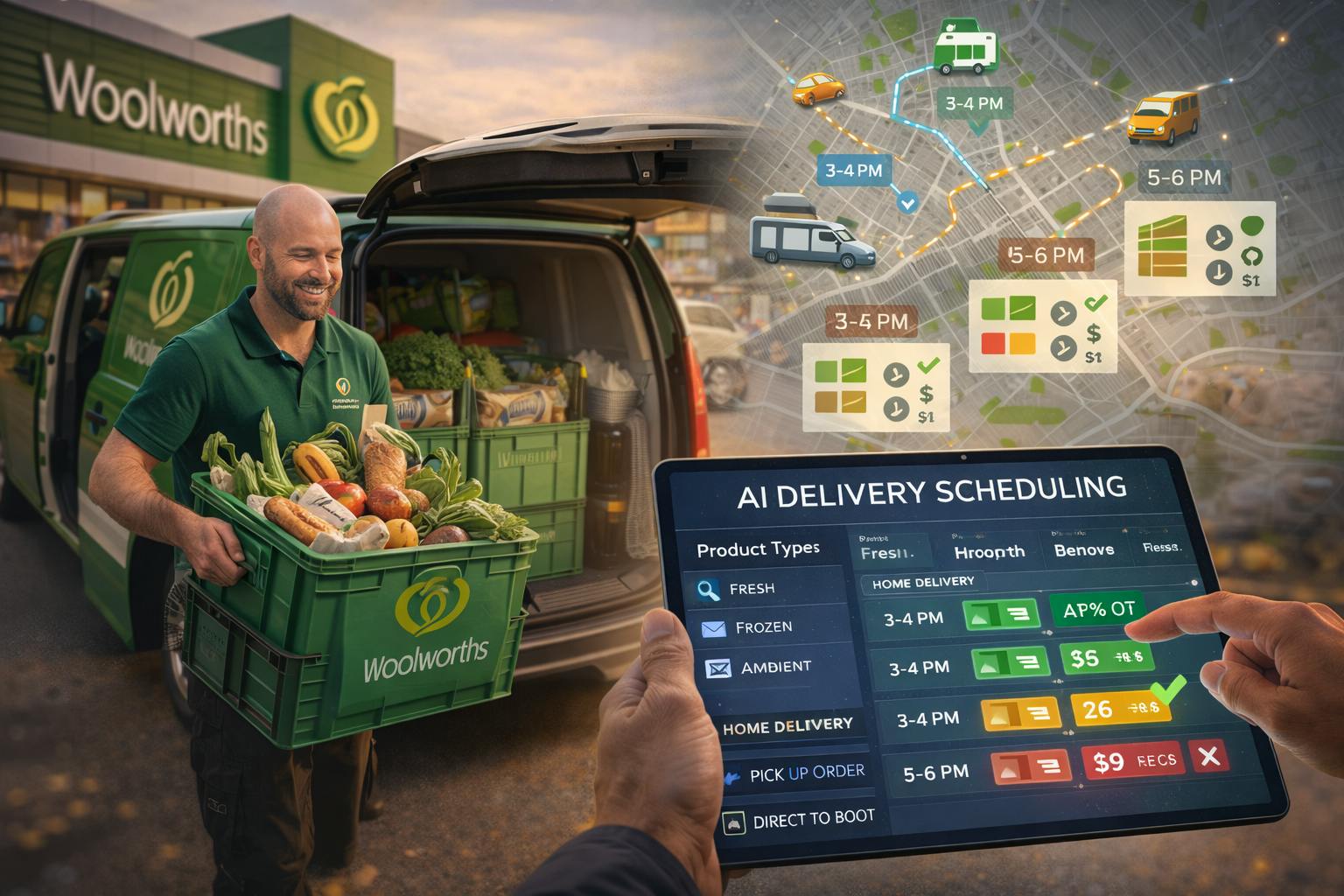
Woolworths is the leading grocery retailer in Australia. They operate over 1,000 supermarkets, and their e-commerce business makes 24 million home deliveries annually and completes over 17 million Pick Up and Direct to Boot orders. Woolworths manages a large, diverse workforce with varying availability, contracts, and preferences — while facing highly variable customer demand. Every e-grocery order triggers a complex decision: how should this order be delivered? From which location? Using which delivery method? With thousands of orders arriving continuously, their current rule-based decision‑making became inconsistent, increased delivery costs, and reduced service reliability during the peaks.
AI-optimization evaluates the best delivery option and available time windows in real time, using multiple inputs: product type (fresh, frozen, ambient), delivery time windows, distance and location, and available delivery resources. Based on this, it computes the best delivery options for that specific order. Each allowed time window comes with a cost, and the customer selects option that works best. After booking, the black-box routing optimizer continuously creates the optimal schedule, respecting time windows and restrictions.
This approach is fundamentally different from traditional tools, since traditional tools use rule-based criteria to propose time windows and neglect the details. This is sub-optimal: in one area it might be that there is still room for extra orders, while in another area too many orders are accepted. By using AI and advanced optimization, Woolworths makes better decisions as orders arrive. The system applies consistent economic logic at scale and continuously optimizes routes to minimize driving time.
Shared Lessons Across All Three Organizations
Despite their differences, BaptistCare, Rio Tinto, and Woolworths demonstrate three common truths:
- Good schedules are multi-objective problems. Cost, coverage, fairness, safety, and wellbeing are optimized together.
- Employee-centric scheduling improves operational outcomes. When fatigue, preferences, fairness and compliance are respected, wellbeing and performance improve.
- AI supports human decision-making; it doesn’t replace it. Planners retain control — AI expands what is feasible to consider.
These real-world cases show how AI optimization transforms scheduling from a reactive task into a deliberately designed system — one that balances human and business needs transparently. Baptist Care, Rio Tinto, and Woolworths all demonstrate that better schedules are not an abstract promise. They are already being built, deployed, and refined — with tangible benefits for employees and organizations alike.