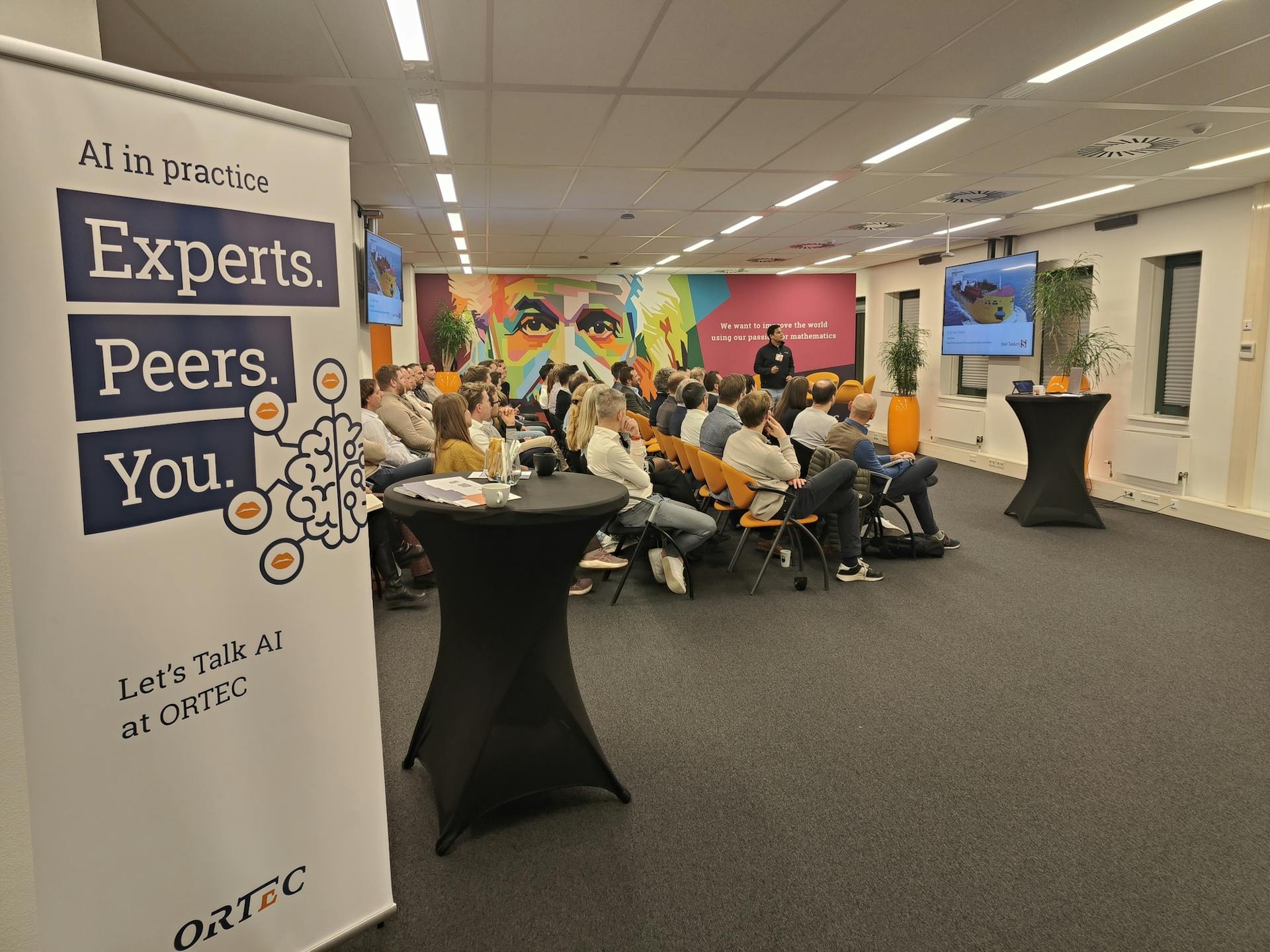
AI has entered a phase of practical adoption, influencing how organizations make decisions, structure workflows, and run their operations. To bring customers and partners together around the practical realities of this AI transformation, we hosted our Let’s Talk AI event, an in-person knowledge-sharing gathering at our headquarters in Zoetermeer.
The event focused on how AI is being applied in planning and decision-making, where automation and AI-enabled workflows are delivering measurable value, and how enterprises can move from experimentation to large-scale impact. With contributions from ORTEC, Microsoft, and Stolt Tankers, the event highlighted both strategic perspectives and real-world use cases now emerging across industries.
Generative AI marks the shift from assistance to true process transformation.
AI Adoption Today: From Experimentation to Enterprise Impact
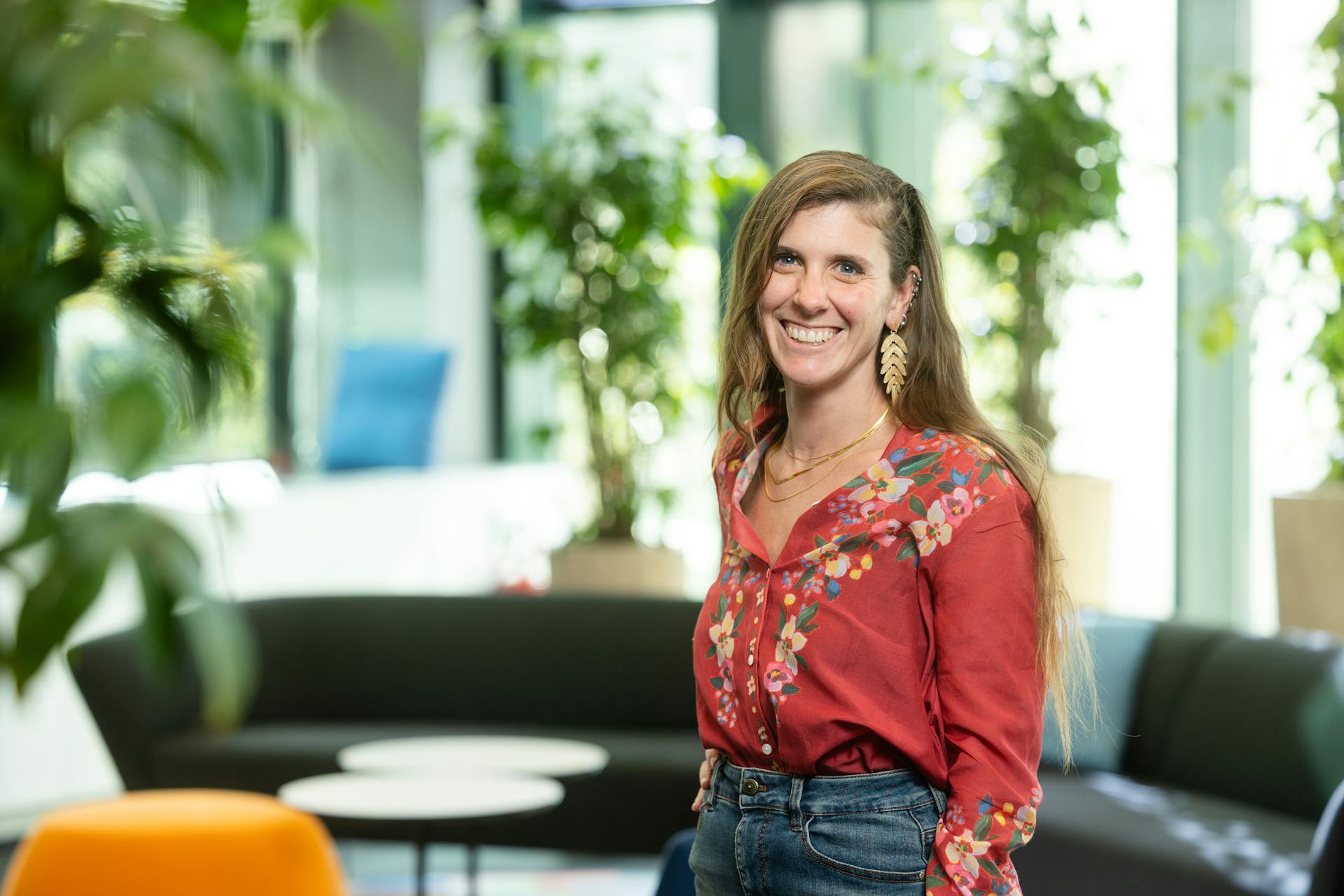
Erica D’Acunto (VP Innovation, ORTEC) opened the event by outlining the current state of AI adoption. Drawing on recent market research, she highlighted the growing scale and maturity of experimentation across industries.
Generative AI: Moving Beyond Assistance to Workflow Transformation
“80% of organizations are exploring or piloting AI technologies,” she said, noting that much of this activity focuses on generative models used for productivity tasks. According to the same report, 64% of organizations already see these tools accelerating innovation, primarily because they enable faster iterations and make new ideas feasible.
She added that experimentation is no longer limited to individual use. “62% of organizations are automating parts of entire workflows using generative AI. That shift marks the step from assistance to true process transformation.”
Erica D’Acunto, VP Innovation, ORTEC
"The organizations that see returns don’t just optimize. They use AI to differentiate."
At the same time, she noted that organizations increasingly debate the return on AI investment. “The companies that achieve returns are not only looking at efficiency, they are integrating AI into products and services to differentiate, not merely optimize.”
AI in Planning and Decision-Making: Where Value Emerges
The organizations in the top 5% treat AI as a strategic transformation, not a tech experiment.
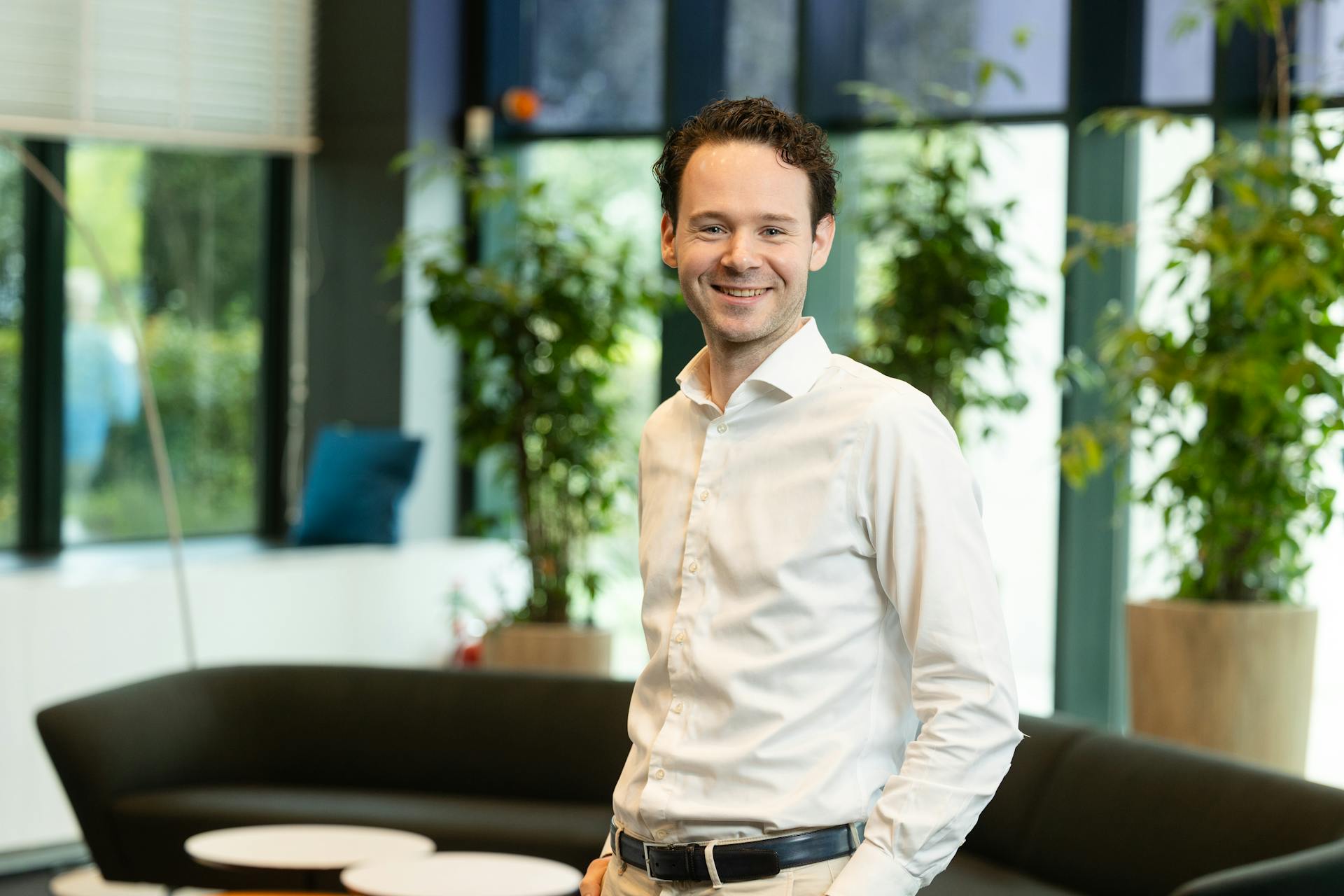
The first keynote came from Sander Vlot (VP Center of Excellence, ORTEC Data Science & Consulting), who discussed AI’s role in planning and decision-making processes across industries.
He began by acknowledging the simultaneous enthusiasm and frustration surrounding AI. “There is enormous investment and interest, but 95% of organizations still see no return on their AI projects.” The task, he argued, is to understand what the remaining 5% are doing differently.
For Vlot, the starting point is clear: value emerges when organizations automate the structured, repeatable work that planners perform every day. These tasks include extracting information from emails, interpreting supplier updates, digitizing documents, forecasting demand, running scenario analyses, and shaping recurring reports.
“These activities are rational, predictable, and carried out continuously. They are ideal candidates for automation.”
Different tasks require different cognitive abilities. No single AI method does everything well.
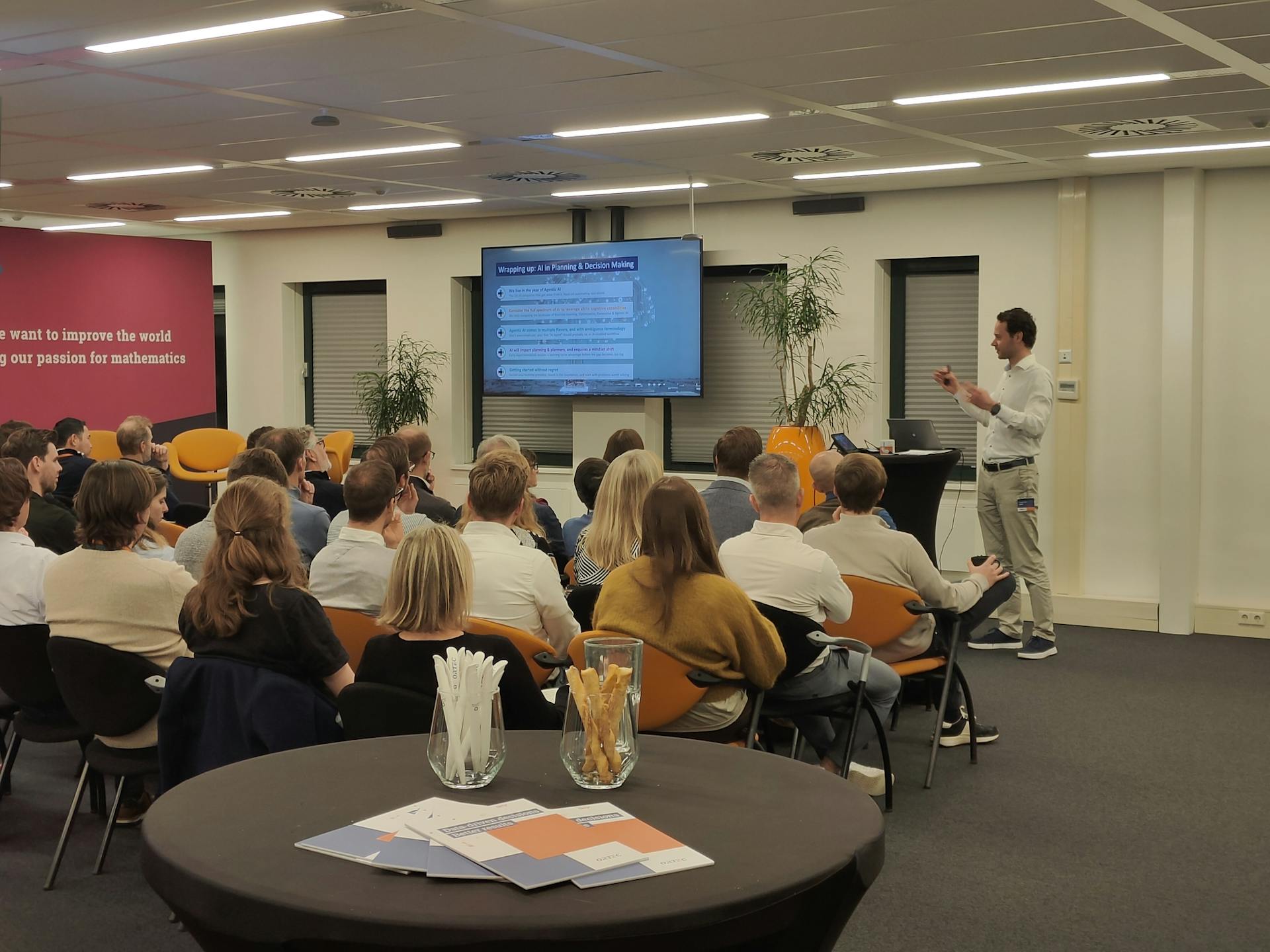
He encouraged organizations to think in terms of cognitive capabilities rather than technologies. Large language models excel at interpreting unstructured inputs such as emails, documents, and PDFs, while forecasting and optimization often require traditional machine learning or mathematical optimization tools.
Vlot also addressed the widely discussed notion of AI agents. While multi-agent systems can autonomously pursue goals, they are complex, difficult to control, and rarely necessary in early adoption stages. “For most organizations, the first ‘AI agent’ should be an AI-enabled workflow, not a fully autonomous system.”
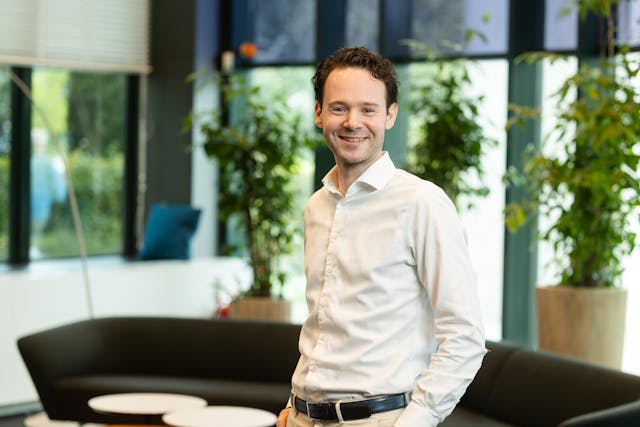
Sander Vlot, VP Center of Excellence at ORTEC
"Your first AI agent shouldn't be autonomous. It should be a workflow."
He concluded with a reminder that adoption is not just technical. “AI requires a mindset shift. As more planning activities become automated, planners will increasingly supervise, adjust, and improve automated policies rather than manually create them. That evolution takes time.”
AI isn’t just a technology shift. It’s a mindset shift, and that takes time.
Designing AI-Driven Workflows: Insights from Microsoft
The next speaker, Francesco Tumiatti (Cloud and AI Specialist, Microsoft), explored how organizations progress from experimenting with generative AI to deploying AI agents that handle substantial portions of operational workflows.
Tumiatti introduced the concept of a “frontier firm”, organizations that combine human judgment with AI-driven execution. In these firms, employees interact daily with AI systems and delegate tasks to specialized agents.
He outlined three phases of AI adoption:
- Individual productivity, through tools such as Copilot or ChatGPT
- Task delegation, where AI agents perform defined activities such as research, drafting, or validation
- Process automation, where teams of AI agents coordinate end-to-end workflows
Models are commodity. The real challenge is designing the right workflow.
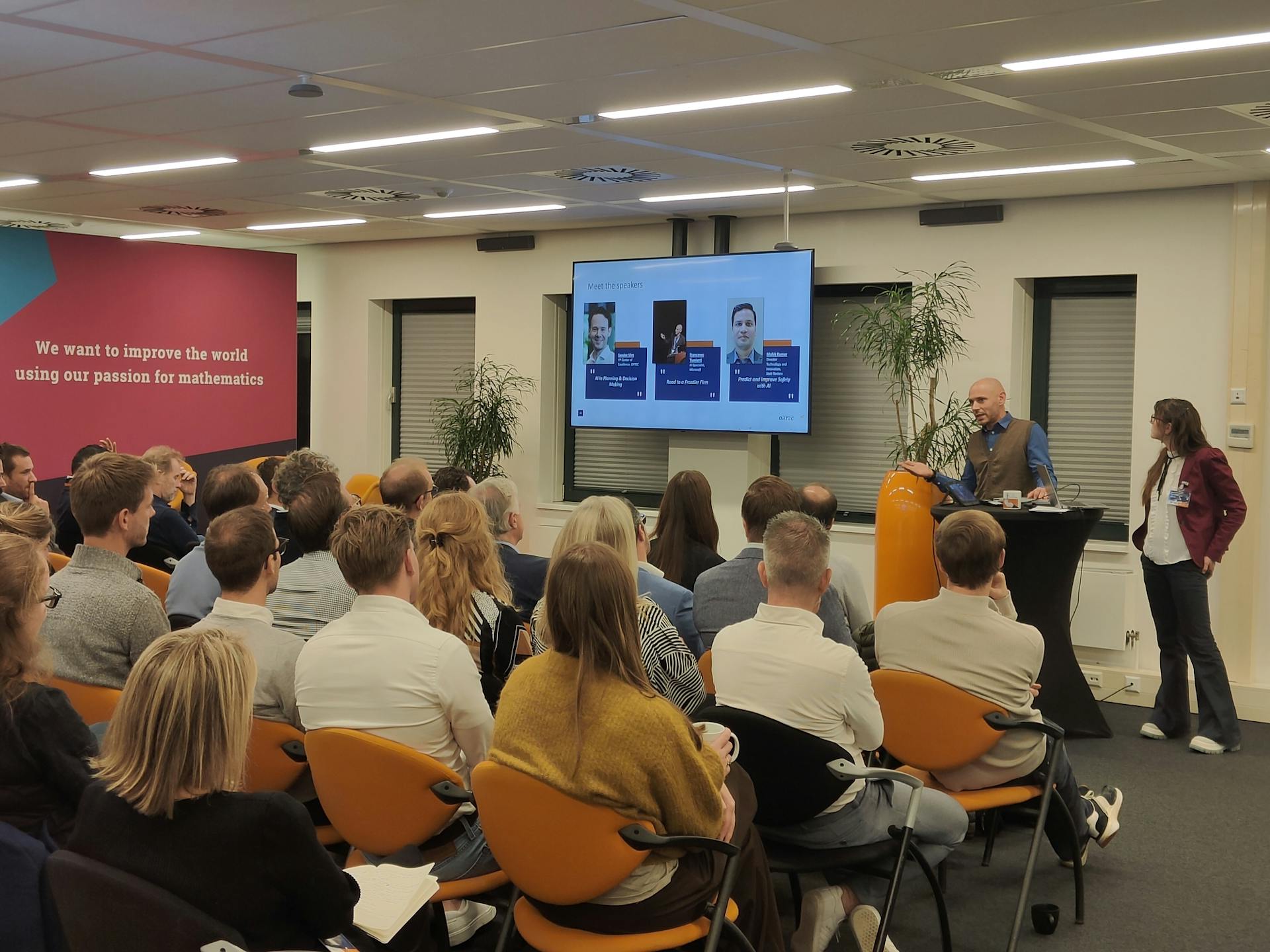
To illustrate, he shared a case study of a consumer goods company automating its order-to-cash process. The organization mapped its workflow, identified the required capabilities, and assigned responsibilities to different agents, each powered by an appropriate model.
“Agents used small, fine-tuned models for customer interaction, and reasoning-focused models for complex validation steps. Enterprise systems imposed the business rules, preventing invalid actions.”
The key barrier, he stressed, is not technology. “Models are commodity. The real challenge is selecting the right process, breaking it into jobs agents can perform, and ensuring enterprise readiness such as telemetry, monitoring, and governance.” Without that maturity, proof-of-concepts rarely reach production.
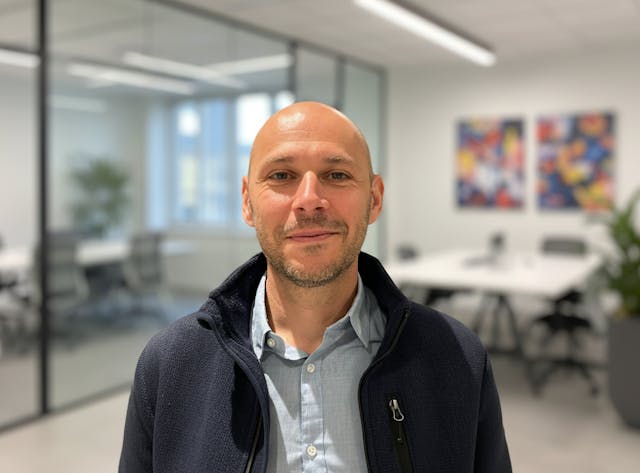
Francesco Tumiatti, Cloud and AI Specialist at Microsoft
"Bottom-up experimentation is valuable, but without a unified AI strategy nothing scales."
How to Identify “Agent-Ready” Work
Francesco Tumiatti highlighted that organizations can begin working with AI agents by selecting small, well-defined tasks that are suitable for automation. A task is “agent-ready” when:
- It follows a clear, repeatable sequence of steps
- Decisions can be made using existing data or business rules
- Exceptions are easy to detect and escalate to humans
His recommendation: start with one contained activity, automate it with proper monitoring and guardrails, and only expand once the first slice performs reliably. This step-by-step approach helps organizations build confidence while safely scaling agent-driven workflows.
Case Study: How Stolt Tankers Uses AI to Predict Safety Risks
Around 70% of maritime accidents relate to human factors.

The most operational case study came from Mohit Kumar (Global Director Business Technology and Innovation, Stolt Tankers), who explained how Stolt is using historical data to predict and reduce safety incidents across its global fleet.
Stolt operates roughly 160 vessels worldwide, many transporting hazardous chemical cargo. The core question: can data reveal which voyages carry higher risk and can those insights improve safety?
“70% of maritime accidents relate to human factors,” Kumar said. Stolt therefore sought to analyze patterns that consistently correlate with safety outcomes.
Several strong predictors emerged:
- Audit frequency: fewer audits correlated with significantly higher incident rates
- Cargo complexity: voyages with many cargo types had higher incident probability
- Vessel age: older ships experienced more operational events
- Crew composition: diversity and familiarity were decisive

Mohit Kumar, Global Director Business Technology and Innovation at Stolt Tankers
"The model predicted nearly 90% of high-risk voyages before they happened."
Kumar elaborated: “Our data seems to suggest that if the captain is not part of the majority nationality, or if crews have worked together only a short time, incident rates seem to rise measurably.”
Stolt trained a machine learning model using seven years of data and validated it on recent voyages. The model proved strongly predictive. “Roughly 90% of high-risk voyages had indeed experienced events. And around 65% of accidents fell into categories the model flagged beforehand.”
The company is now working to integrate these insights operationally. While some risk factors such as ship class or cargo complexity cannot be changed, others can be adjusted.
Some risks can’t be changed, but many operational choices can reduce them.
Panel Takeaways: Separating AI Hype from Real Business Value
After the keynotes, the speakers joined a panel moderated by Chuck Ng, Principal Consultant at ORTEC Data Science & Consulting. The conversation revolved around three central questions: how to separate hype from real value, where AI is already delivering measurable impact, and which barriers organizations encounter most often.
The panel agreed that the distinction between hype and value starts with a simple filter: does the technology meaningfully improve a process, a decision or a customer outcome? If not, it is hype.
Sander Vlot added that many challenges can be solved without sophisticated AI at all. “If better UX solves the problem, use better UX. Not every interaction requires a chatbot.”
Better UX can solve more problems than a chatbot ever will.
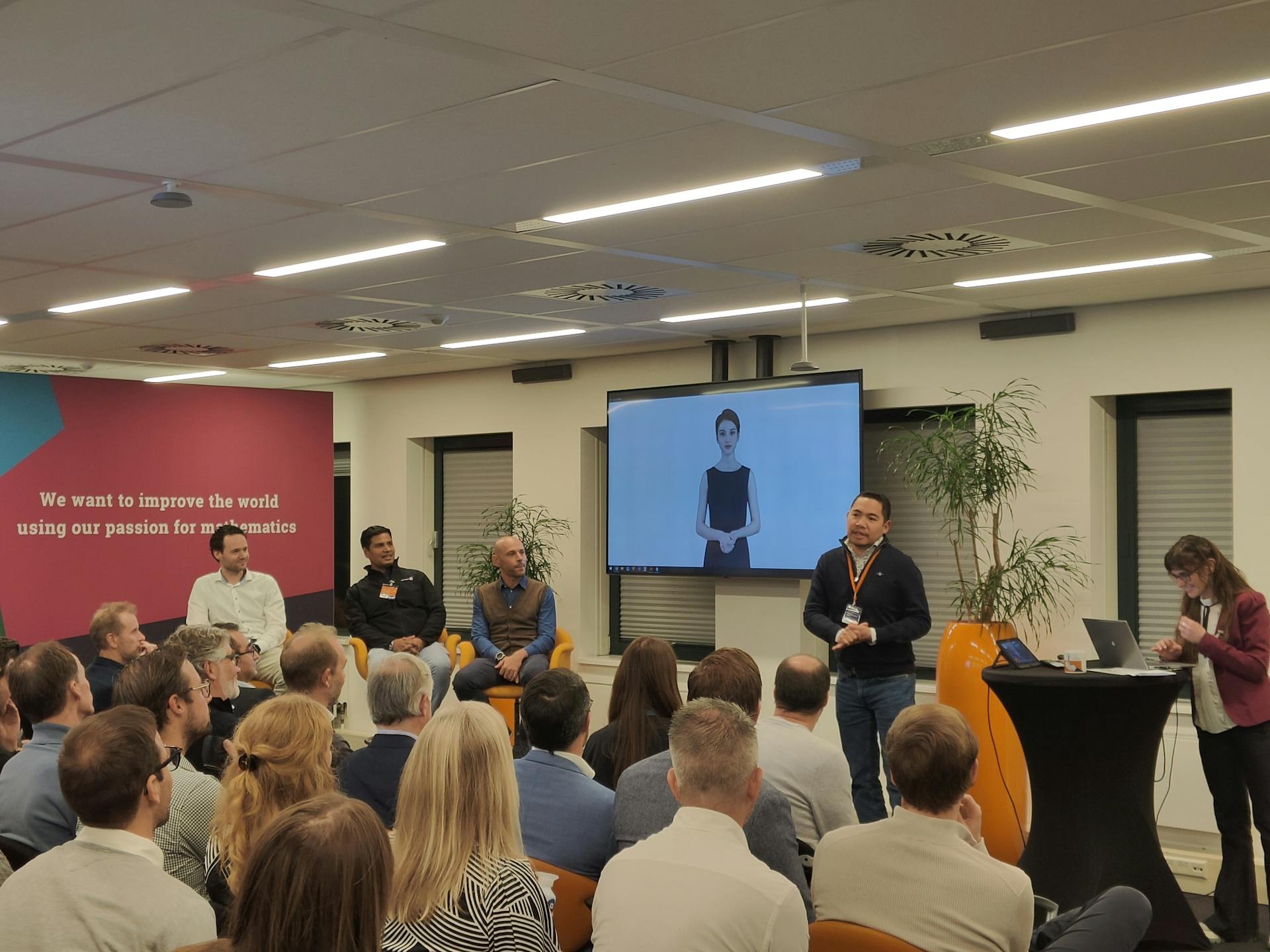
Francesco Tumiatti emphasized that alignment with business goals is essential. “If you cannot connect technology to a measurable business result, it is not value, no matter how advanced it looks.”
Francesco Tumiatti, Cloud and AI Specialist at Microsoft
"You can’t measure AI value without connecting it to business outcomes."
The panel highlighted several examples where organizations are already seeing tangible gains: productivity improvements through Copilot, faster design sprints using generative AI, stronger tender responses and utilization improvements at Stolt, and everyday efficiency benefits such as automated meeting summaries and documentation.
The final part of the discussion focused on barriers to adoption. Mohit Kumar pointed to culture and literacy: “If you automate tasks close to what people already understand, they adopt quickly. When you transform the process itself, change becomes harder.”
Mohit Kumar, Global Director Business Technology and Innovation at Stolt Tankers
"AI adoption accelerates when you automate tasks people already understand."
Vlot noted that many organizations struggle simply to identify routine work. “People only start seeing automation opportunities once they work with AI tools themselves. Experimentation builds awareness.”
Tumiatti added that experimentation alone is not enough. “Bottom-up experimentation is valuable, but without a unified AI strategy, prototypes rarely move to production.”
Next Steps: Building Your AI Strategy for Scalable Impact
The conversations during Let’s Talk AI made one point unmistakably clear: value doesn’t emerge from bigger models or more features, but from reimagining how decisions are made and how work flows through the enterprise. The organizations that take this seriously now will define the next decade of operational performance.
Let's Talk AI
If you want to explore what this shift means for your planning, decision-making or end-to-end processes, our teams are ready to start that dialogue.
Frequently Asked Questions: AI in Planning and Decision-Making
Want to dive deeper into the insights from ORTEC’s Let’s Talk AI event? Below, we answer the most common questions about how AI is transforming planning, decision-making, and enterprise workflows. From generative AI adoption to real-world impact cases, these FAQs help clarify where AI delivers measurable business value and what steps organizations can take to scale successfully.
What was the main focus of ORTEC’s Let’s Talk AI event?
The event explored how AI is transforming planning, decision-making, and enterprise operations. Speakers from ORTEC, Microsoft, and Stolt Tankers shared insights on moving from AI experimentation to large-scale impact through AI-enabled workflows.
How is generative AI changing enterprise workflows?
Generative AI is shifting from simple productivity assistance to enabling automated workflows. According to ORTEC’s VP Innovation, 62% of organizations are already automating parts of entire workflows using generative AI, marking a major step toward process transformation.
What are the key phases of AI adoption for enterprises?
Microsoft outlined three phases:
- Individual productivity (tools like Copilot)
- Task delegation (AI agents performing defined activities)
- Process automation (AI agents coordinating end-to-end workflows)
What practical steps help organizations succeed with AI?
Start with small, repeatable tasks that follow clear rules and can be monitored easily. Design workflows rather than isolated pilots, and align AI initiatives with measurable business outcomes.
How is AI applied in planning and decision-making?
AI adds value by automating structured, repeatable tasks such as demand forecasting, scenario analysis, and document interpretation. These activities are ideal for AI-enabled workflows because they are rational and predictable.
What real-world impact did Stolt Tankers achieve with AI?
Stolt Tankers uses machine learning to predict operational safety risks. Their model identified nearly 90% of high-risk voyages before incidents occurred, helping reduce accidents and improve safety across their global fleet.
What barriers do organizations face in scaling AI?
Common challenges include lack of a unified AI strategy, cultural resistance, and difficulty identifying routine work. Bottom-up experimentation helps, but without enterprise readiness and governance, prototypes rarely reach production.