1. Moving beyond Dashboards toward Operational Intelligence
Opening the session, ORTEC framed AI not as a standalone technology, but as one part of a broader decision‑making ecosystem. Jordan Bliss, VP Research and AI at ORTEC, emphasized that while AI and advanced mathematics are powerful, they do not deliver value in isolation. Optimization excels at solving defined problems, and AI is strong at recognizing patterns, but without operational context the results can fall short. As he explained, domain expertise is what keeps models grounded in how supply chains actually work.
This philosophy shapes ORTEC’s Ai approach: supporting planners rather than replacing them. The goal is to remove unnecessary complexity from daily work, allowing people to spend less time fighting the system and more time making informed decisions. In this sense, AI becomes a lever for human expertise, not a substitute for it.
Introducing “Art by ORTEC”: intelligence embedded in decisions
A key highlight of the webinar was the introduction of Art by ORTEC, a new intelligence layer designed to be embedded directly into planning workflows. Instead of acting as another dashboard or separate tool, Art by ORTEC supports planners where decisions are made.
During the session, Jordan Bliss outlined a clear three‑horizon roadmap for AI adoption. Today’s focus is on assistive capabilities, such as in‑app guidance, natural‑language filtering and faster scenario analysis. Over time, this evolves into guided and suggestive recommendations, where AI proposes actions but leaves the final decision with the user. The long‑term vision is configurable autonomy, where AI can act independently within defined guidelines, building trust step by step.
Across all horizons, humans remain in control. AI supports planners by highlighting options, clarifying impacts, and simplifying decisions.

2. Demonstrating Cloud-Native Planning in Practice
The webinar focused heavily on live demonstrations rather than slide-based presentations, giving attendees a practical look at ORTEC’s cloud-native B2B delivery suite.
Ben Kumar, Business Consultant at ORTEC, showcased how organizations can manage the full planning lifecycle within a single environment - from depot assignment and territory design to tactical planning, operational planning, dispatching, and execution monitoring.
AI assistance already plays a role here by explaining optimization logic, supporting re‑optimization requests and helping users understand why certain outcomes occur. This transparency was a recurring theme: rather than hiding complexity, the system helps planners interact with it more confidently and efficiently.
3. Customer perspective: Bunzl Catering Supplies
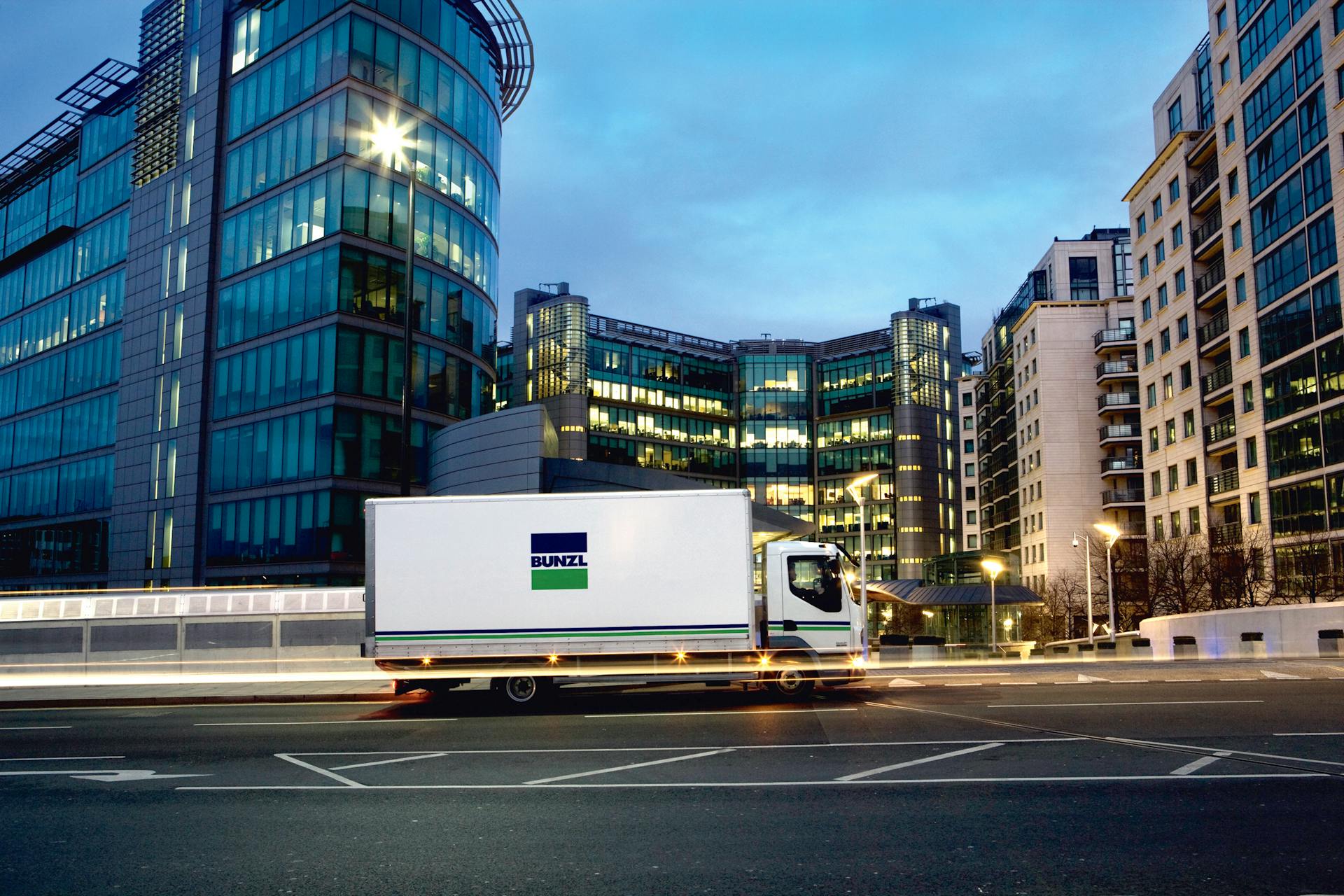
The session was grounded further by a customer interview with Bunzl Catering Supplies. As an early adopter of ORTEC’s B2B suite, Bunzl shared practical insights from live operations. David East, Head of Transport highlighted tangible improvements since going live, from regular map updates without downtime to faster route generation and a more intuitive user interface. One benefit stood out in particular: reduced training time. New planners can now be productive far more quickly than before, while more accurate route timing has helped maximize driver shifts, increase drops per route and improve on‑time performance. These outcomes underline a recurring message from the webinar: technology delivers value when it simplifies work, not when it adds friction.
4. Optimization beyond routing: Load Optimization and Home Delivery
The webinar also explored how optimization extends beyond route planning into warehouse and delivery execution. DeNorris Johnson, Pre-Sales Manager at ORTEC, presented ORTEC’s 3D load optimization capabilities, demonstrating how organizations can improve vehicle utilization while accounting for real-world operational constraints such as: stackability, axle weight distribution, temperature zones, product sequencing, warehouse automation requirements.
The session also introduced ORTEC’s new loading app, designed to support warehouse teams and drivers with interactive 3D loading instructions and visualization tools.
5. AI-driven Optimization from Planning to Execution
Finally, Esmee Snippe, Business Consultant at ORTEC, showcased ORTEC’s B2C Home Delivery suite, highlighting how dynamic time slotting and continuous optimization help organizations balance customer experience with operational efficiency. The suite combines real-time time slot generation, automatic scheduling, delivery area management, and execution monitoring to balance customer experience with operational efficiency.
Together, the demonstrations illustrated how AI-driven optimization is increasingly being embedded across the full supply chain planning and execution landscape.
Conclusion: Where AI delivers real value
Taken together, the discussions pointed to a clear insight. AI in supply‑chain planning delivers results not by taking decisions away from people, but by making better decisions easier to reach. When intelligence is embedded directly into operational workflows, planners can make faster and more confident decisions.
Rather than promising fully autonomous supply chains overnight, ORTEC focuses on practical AI that delivers measurable value over time.

Talk to our Experts
Learn how ORTEC’s AI-driven solutions can help your organization improve planning efficiency, scalability, and operational performance.