Packing and loading: a complex puzzle
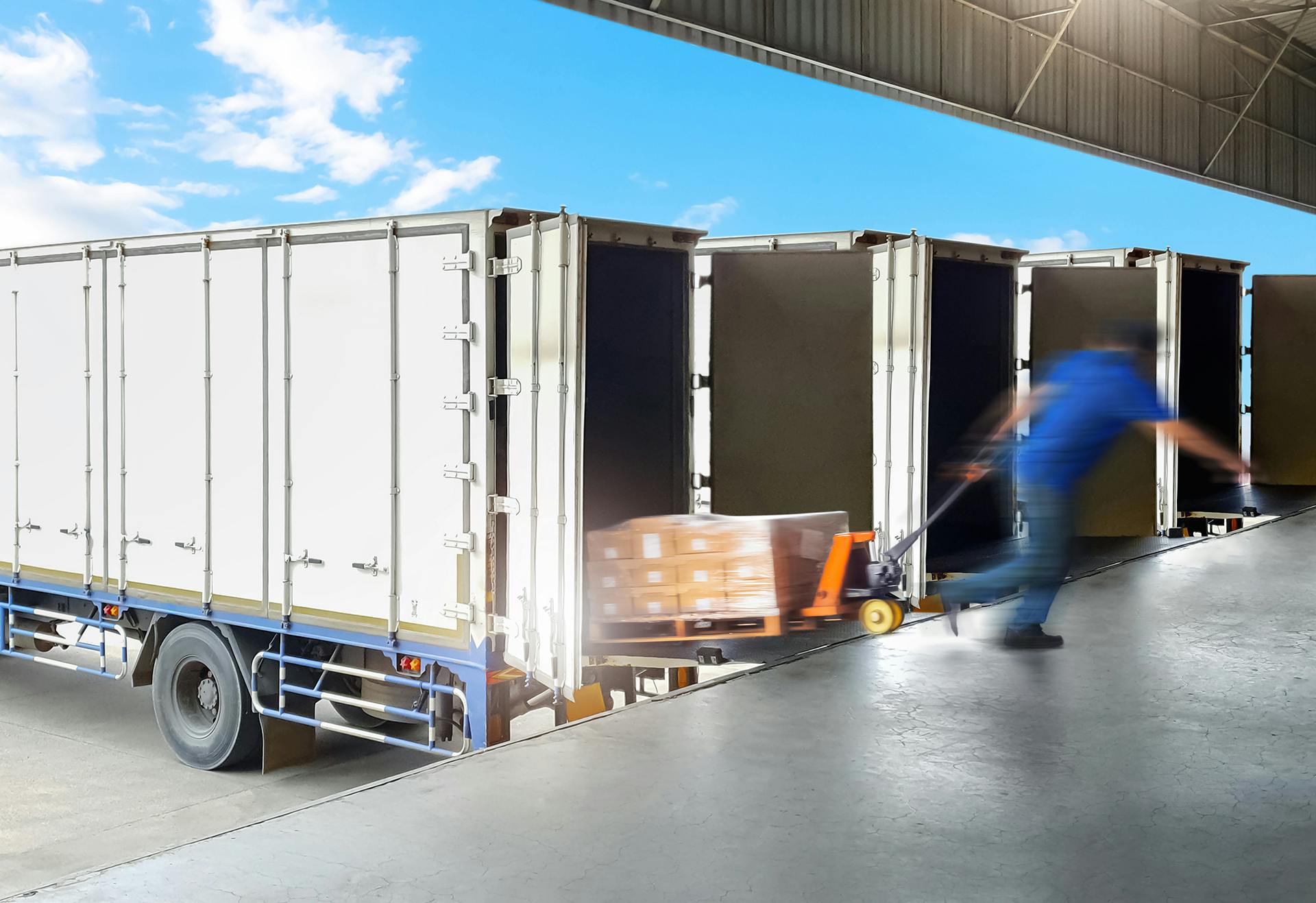
All companies that transport goods have to do packing and loading at some point. There are many parts to this puzzle. There’s what’s known as cartonization (or packing products into cartons), palletization (or packing into pallets), and the actual loading itself. The big issue here is often complexity: it’s a 3D Tetris problem with thousands of real boxes. Most companies ship a lot of different types of products, with different weights, dimensions and packaging needs. Typically, planners have to ask themselves:
- What carton should I select for packing?
- How should the pallets be stacked while respecting complex loading restrictions?
- Which products should we load together to maximize the fill rate?
- How many trailers do I need and how can they be used efficiently?
To reduce some of this complexity, most companies plan logistics upfront. They tend to do this manually, so they have to simplify the problem to a considerable degree. This leads to planning inaccuracies and more exception management. Space is wasted because they play it safe, so they end up with excess packaging and suboptimal truck fills. In short, what we often see is that companies have either too much capacity or too little. Too little means they might need an additional truck, which costs more money. Too much means they are paying for idle freight and releasing excess emissions. How can they strike the right balance?
The big issue here is often complexity: it’s a 3D Tetris problem with thousands of real boxes.

Mathematical optimization to the rescue
Many companies are adopting 3D load optimization to tackle this trade-off. As we explored in another article, Gartner mentions 3D load building as an extended and high importance capability for transportation management. 3D load building uses mathematics to propose optimal load configurations to fill logistics units. Unlike most simplistic systems which only take volume into account, ORTEC’s load building software considers all aspects of the packing and loading problem. It considers actual package dimensions and multiple physical, legal and business-specific rules. It helps you pick the right cartons, pallets and trucks and what should be in each. This type of packing and loading optimization can be used in many different business areas. Let’s explore some use cases below.
Gartner mentions 3D load building as an extended and high importance capability for transportation management.
Optimized carton selection
As we mention above, many companies are struggling to minimize the use of filling material to respond to sustainability concerns. A 3PL company approached us to solve this problem for multiple of their clients. They manage and execute the order fulfilment of parcel e-commerce shipments. Following a value assessment, we found that they could achieve major savings in their supply chain by using less filler and avoiding labor-intense repacking. The key was selecting the best fitting carton size from the start. This could save them about 40 cents per carton.
Trailer optimization
An even larger savings potential can be found in more expensive road and sea transportation scenarios. A large manufacturer wanted to ship less air when doing interplant transport. They also wanted to reduce the time required for planning. They had a typical “brick and pillow” problem: a combination of product groups which were small and heavy, and large and light. The challenge was balancing the product mix in a load to maximize weight and volume fill rate. Our software helped them find the right loading combination in order to reduce the total number of trucks needed. They were able to increase load utilization by 9% and reduce freight costs by 10%. Planning times were cut in half.
In this article, we uncovered some of the secrets that can help you ship less air. Many companies have tackled this challenge, using ORTEC software to support them. We hope these examples inspire you to start using load optimization. If you are curious about how ORTEC can help your company minimize empty space in the supply chain, feel free to contact us to learn more.
The challenge was balancing the product mix in a load to maximize weight and volume fill rate. Our software helped them find the right loading combination in order to reduce the total number of trucks needed. They were able to increase load utilization by 9% and reduce freight costs by 10%. Planning times were cut in half.
Want to talk to one of our experts?
If you are curious about how ORTEC can help your company minimize empty space in the supply chain, feel free to contact us to learn more.