Where Data Meets Purpose: How Attendo Transforms Care with Workforce Optimization
Read time: 6-7 minutesAttendo, one of the Nordics’ largest care providers, has transformed elderly and disability care through data-driven workforce optimization. Partnering with ORTEC, Attendo combines technology, culture, and continuous improvement to deliver smarter, fairer, and more human care for thousands of residents across Finland.
Interview with Business Development Director & Head of Data Minna Nissinen and ICT Manager Heidi Lilleberg of Attendo
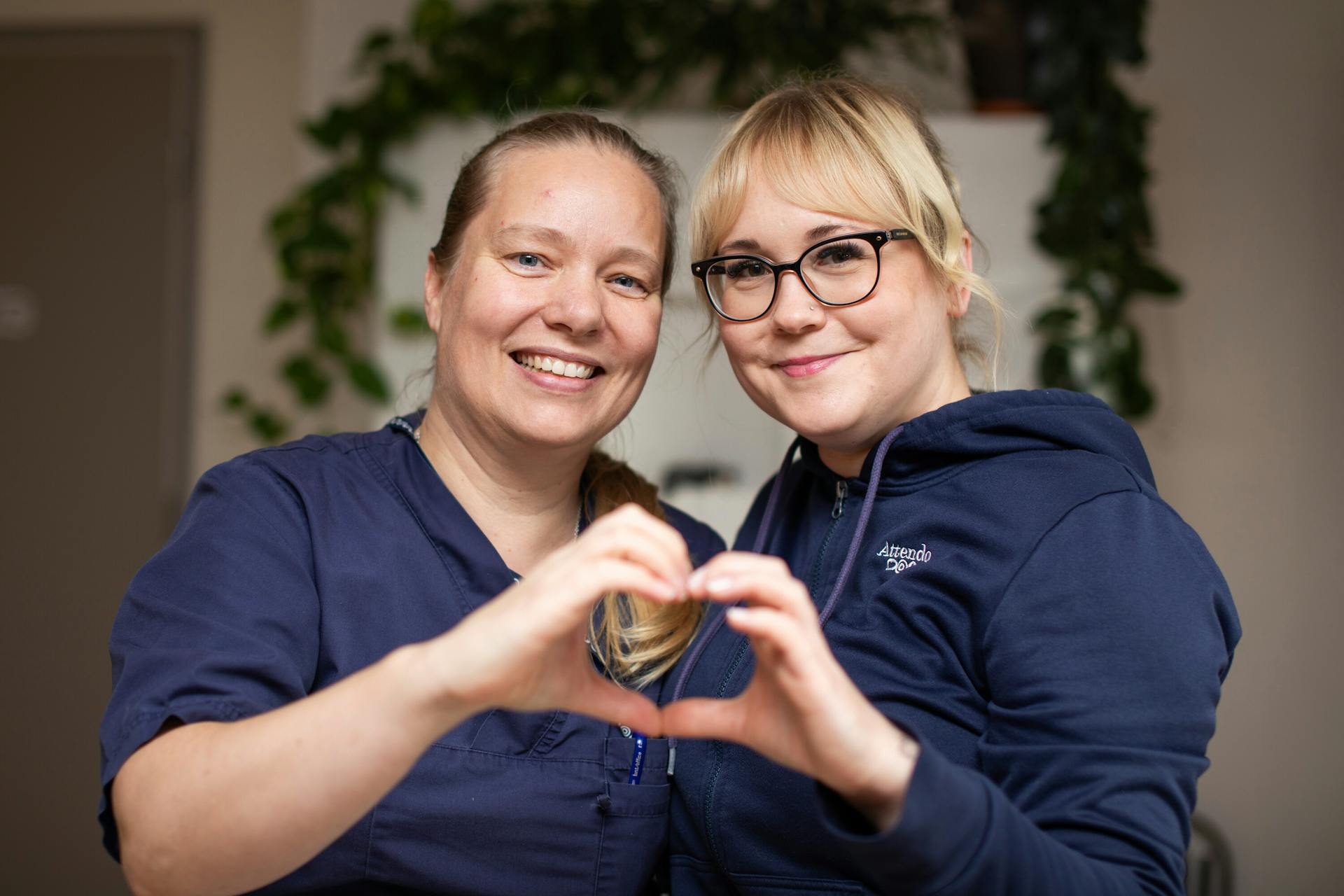
In Finland, where the population is aging rapidly and staffing shortages are looming in the foreseeable future, Attendo has earned a reputation as one of the most forward-thinking care providers in the Nordics. With more than 17,000 employees in Finland and well over 400 care homes, the organization has reimagined how care, data, and technology come together, not just to make operations more efficient, but to improve the quality of life for both residents and staff. Over the past decade, Attendo has built a long-term partnership with ORTEC. What began as a practical collaboration to solve scheduling problems has evolved into something deeper: a shared pursuit of continuous improvement in the way care is organized and delivered.
Care Company with a Mission
“We’re often described as an elderly care provider, but that’s only part of the story,” explains Minna Nissinen, Business Development Director and Head of Data at Attendo. “We also run homes for people with disabilities, social psychiatry, and substance rehabilitation. Our dream is simple but powerful: Above all, we are a home.”
That mission, she emphasizes, shapes every innovation Attendo undertakes. “Encounters are at the heart of what we do: the quality of life for our residents depends on meaningful interactions. Technology helps us make those encounters possible.”
Attendo’s transformation began in 2019, during a nationwide care crisis that forced the entire Finnish care sector to change. “The quality of care wasn’t what it should have been,” says Heidi Lilleberg, ICT Manager. “We had grown so fast that our support systems were falling behind. That crisis became our turning point.”
The company launched what it called the Change Journey: a comprehensive cultural and operational transformation that prioritized customer encounters, employee engagement, and data-driven decision-making. “We understood early on that culture comes first,” Minna explains. “Only then can technology truly make a difference.”
"Whatever you’re changing – tools, systems, or ways of working – what’s key is people’s ability to adapt."
Minna Nissinen, Business Development Director & Head of Data, Attendo
Culture Before Code: Why People Drive Digital Transformation
Attendo’s philosophy – that digital transformation starts with people – has guided every step of its journey. Rather than implementing technology for its own sake, the company invested first in data culture, leadership engagement, and change management. “Whatever you’re changing – tools, systems, or ways of working – what’s key is people’s ability to adapt,” says Minna. “That’s why every rollout starts with communication and understanding, not with software training.”
That mindset was crucial when Attendo began implementing one of its ambitious projects: the Workforce Optimizer.
Workforce Optimizer: From Manual Rosters to Intelligent Planning
For years, shift planning at Attendo was a local, manual process, with each home having its own spreadsheets, rules, and habits. The introduction of ORTEC’s Workforce Optimizer changed that reality. It took on board the criteria for optimization set out by Attendo management, including for instance employee preferences. Using those criteria, the tool generates schedules that are legally compliant, fair, and aligned with both employee preferences and resident needs. But the real transformation was a cultural one.
Before rolling out the system, Attendo didn’t start with training sessions; it started with a workshop for top management. Executives were asked to manually build a shift plan themselves, only to find that even a “simple” plan was nearly impossible to complete without breaking labor laws. Then the optimizer did the same task in minutes. “It was an eye-opener,” recalls Heidi. “That’s when people realized the potential of data-driven planning.”
Today, the rollout spans more than 400 care homes, with hundreds of planners using the optimizer as their daily tool. The change didn’t happen overnight, but Attendo’s investment in communication and change management made it possible. “It’s still a work in progress,” Minna admits, “but the quality of the plans keeps improving.”
The shift was far from easy. Training hundreds of planners and convincing over 400 unit managers to adopt new ways of working took time and persistence. “It’s not just a technical project,” Minna says. “It’s a human transformation. You have to build trust, explain the ‘why,’ and show results step by step.”
The results are tangible. Legal compliance has improved, scheduling conflicts have decreased, and planners now spend less time firefighting and more time on proactive staff management. Attendo also discovered that optimization could be a tool for employee well-being: “We built in staff preferences as a key factor,” Minna explains. “When people’s wishes are reflected in their schedules, they feel heard.”
It’s fair to call it a partnership. ORTEC listens to our needs and takes an active role in developing solutions that fit our reality.

Co-Creation, Not Procurement: Building True Partnerships
Attendo’s collaboration with ORTEC began back in 2013, when the organization sought a new workforce scheduling system. “At the time, there was no visibility across the company,” Heidi recalls. “Each home managed its own schedules, and management had no overview. We needed a system that connected everything.”
Over the years, the partnership evolved into a true collaboration. “After ten years of working together, it’s fair to call it a partnership,” Heidi says. “ORTEC listens to our needs and takes an active role in developing solutions that fit our reality.”
When Attendo’s regional managers needed better insight to approve schedules, the first thought wasn’t to build something from scratch, but to ask ORTEC. “They already had the right components, and we adapted them together,” says Minna. That agility – solving real operational problems through collaboration – has become the hallmark of the partnership.
The Human Side of Data: Connecting Well-Being and Care Quality
While optimization may sound technical, its impact is deeply human. One of the most telling examples is the Happy Slider, a small feature that can have a surprisingly large effect on how employees communicate.
The Happy Slider: Giving Employees a Daily Voice
One of the features that Attendo has piloted is the Happy Slider – a daily 1-to-5 mood scale integrated into the Employee Self-Service app that staff already use to check shifts and schedules. The idea was to measure how people feel at work in real time. What surprised everyone was how eagerly employees used it. “We expected quick clicks,” says Heidi, “but we got long, open comments – both positive and negative.”
For managers, the feedback has been invaluable. “Usually, unhappy employees speak up, but the happy ones don’t,” Heidi notes. “The pilot let us hear both sides.”
The data team is exploring how this daily pulse correlates with other quality metrics and is also considering how to implement such a tool into daily management practices – turning it into an early warning system for well-being and care quality. “It’s proactive,” Minna explains. “We can respond before problems escalate.”
This focus on employee voice reflects a larger shift within Attendo: connecting operational data with human experience. “Employee well-being is a leading indicator for care quality,” Minna emphasizes. “The better we understand that relationship, the better we can manage.”
The Happy Slider also revealed an unexpected benefit. “We saw how much positive feedback came in,” Heidi says. “Managers suddenly realized how many employees actually enjoy their work. It changed the tone of conversations inside our homes.”
"Managers suddenly realized how many employees actually enjoy their work. It changed the tone of conversations inside our homes."
Heidi Lilleberg, ICT Manager, Attendo
From Optimization to Prediction: The Future of Care Planning
Even as Attendo continues to refine its current systems, the organization is already looking to the future - toward predictive analytics and AI-driven planning. The goal: to move from reacting to problems toward anticipating them.
Predictive Shift Creation: Planning for Tomorrow, Today
Together with ORTEC Data Science & Consulting, Attendo has begun exploring predictive shift creation, using analytics to forecast the number and type of shifts needed before the scheduling process even begins. The idea is to move from reactive planning to proactive foresight: predicting care demand, aligning staff availability, and minimizing last-minute changes. “It’s still early days,” says Minna, “but the potential is clear. We want to spend less time fixing schedules and more time planning care that truly matches needs. It helps if we can easily respond to changes such as sick leaves of employees, short-term absences of residents, or the arrival of new residents.”
For a sector under pressure from regulation and labor shortages, predictive planning could be the next frontier, helping care organizations anticipate demand instead of constantly reacting to it.
Continuous Improvement as a Way of Working
As the partnership between Attendo and ORTEC enters its second decade, both sides see continuous improvement as the defining theme. It’s a rhythm, not a project. “It’s not about one big implementation,” says Heidi. “It’s about constantly learning from what we see in the data and turning that into small, practical improvements.”
That view is echoed by both teams. Every six months, Attendo and ORTEC organize engagement sessions where they share insights, frustrations, and new ideas. “We talk about what worked, what didn’t, and what’s next,” Minna says. “That’s how we keep evolving.”
For Attendo, the journey is far from over, but its direction is clear. “We’re not just catching up with other industries anymore,” Minna concludes. “We’re building the future of care: one data point, one encounter, one idea at a time.”
Optimization Is a Discipline, Not a Button
Redmar Meijering, VP Business Development (ORTEC)
“Optimization projects in healthcare are rarely linear. They’re iterative by design: you try, you learn, you adjust – and then you repeat that cycle many times. That’s not a bug; it’s the point. The organization learns what “good” actually means under real constraints.
At Attendo we saw all the classic ingredients: many stakeholders, strict labor law rules, skills and certifications that matter per shift, employee preferences you don’t want to ignore, and hundreds of local planners working in parallel. An “optimal” schedule looks different depending on where you sit: leadership, planners, ICT, or HR. If you don’t align on a small set of non-negotiables, you’ll keep moving the target and the project will stall.
What impressed me most at Attendo was the discipline to keep criteria steady while we iterated. They also invested in top-management sponsorship and change management before touching training. That’s how you avoid the trap of “great tool, low adoption.”
Data readiness was the other critical factor. People underestimate how much data hygiene underpins optimization: accurate contracts, skills, availability, rules, demand patterns. If your inputs are messy, the best optimizer will faithfully reflect that mess – faster. Attendo took the long road to put that foundation in place. It took patience, but it paid off.
There were tough moments too. At this scale, usage volumes can strain any platform. We had to fix issues under pressure. That “thick and thin” experience is actually where trust is built. You get to the other side together or you don’t and that determines the partnership.
My takeaway? Optimization is a discipline, not a button. When leadership alignment, clean data, and change management meet an industrial-grade optimizer, you can scale quality, fairness, and compliance across hundreds of homes – consistently."
Co-Creation Means Listening Weekly and Showing Up with Ideas
Hans Olsen (ORTEC)
“Attendo isn’t a customer that buys software. They’re a partner who expects us to co-create continuously. That changes how we show up.
Practically, it means two cadences. First, weekly touchpoints with Heidi and her team, where we listen for friction: What slowed planners down? What’s the one dashboard a regional manager wishes they had yesterday? Second, biannual engagement sessions with a broader group where we bring back synthesized ideas. Not pitches from an ivory tower, but solutions grounded in the year’s conversations.
That’s how we identified the use case for data-driven schedule approval, and implemented the OWS Data Hub – currently named Big Data Portal. Attendo’s regional managers needed data to approve plans with confidence. Instead of building a custom tool from scratch, we looked at what we already had, adapted quickly, and delivered value without months of development.
The Happy Slider pilot is another example. Honestly, I wondered if people would find a daily 1–5 mood question annoying. The opposite happened: staff welcomed a simple way to be heard, and managers received positive feedback they rarely hear face-to-face. It’s a reminder that even small user experience choices can unlock big cultural effects.
Co-creation also includes candor. When the large-scale use of Optimizer created load issues, we didn’t sugarcoat it; we fixed it. When progress slowed because data quality wasn’t there yet, we said so and helped prioritize the groundwork.
If I had to summarize the partnership in one sentence, I’d say: we listen intensely and bring ideas that are usable tomorrow. That rhythm (listen, synthesize, iterate) is how continuous improvement becomes real.”