
Discover practical ways to improve route efficiency, fleet utilization, and last-mile delivery performance.
In foodservice and beverage distribution, route productivity affects far more than transportation costs.
Every route influences driver utilization, customer service, vehicle capacity, delivery reliability, warehouse operations, and overall network efficiency. When routes are planned effectively, distributors can serve more customers, make better use of available resources, and maintain high service levels even as operational complexity increases. Conversely, inefficient routing can lead to excess mileage, missed delivery windows, unnecessary labor costs, and underutilized vehicles.
As customer expectations rise and distribution networks become more dynamic, leading organizations are taking a more strategic approach to route planning. Instead of simply finding the shortest path between stops, they are using data, optimization technology, and AI-powered logistics to improve route productivity across the entire operation. ORTEC helps foodservice and beverage distributors connect these decisions across routing, loading, delivery execution, and continuous improvement.
Why route productivity matters
Many distributors focus on reducing miles or fuel costs when evaluating route performance. While these metrics remain important, route productivity requires a broader view. A productive route balances multiple objectives, including:
Customer service commitments
Delivery efficiency
Driver utilization
Vehicle capacity
Route profitability
Service consistency
Sustainability goals
The most productive route is not always the shortest route. It is the route that best balances service expectations with efficient use of resources. For foodservice and beverage distributors, small improvements in route productivity can create meaningful operational benefits across the network.
The challenges of foodservice and beverage routing
Foodservice and beverage distribution routes are often more complex than traditional parcel or retail deliveries.
➧ Variable customer requirements
Customers often have unique delivery expectations, including:
Preferred delivery windows
Product handling requirements
Delivery frequency agreements
Specific unloading procedures
Site access limitations
These requirements must be incorporated into the routing process without compromising overall efficiency.
➧ Diverse product portfolios
Foodservice distributors may deliver frozen, refrigerated, and ambient products on the same vehicle. Beverage distributors frequently manage pallets, kegs, cases, and specialty products that require specific loading and unloading considerations. Route planning must account for these operational constraints while supporting safe and efficient deliveries.
➧ Labor and driver availability
Many distributors continue to face labor constraints and driver shortages. Improving route productivity allows organizations to increase delivery capacity without proportionally increasing fleet size or headcount. Making better use of available resources has become a critical priority across the industry.
➧ Day-to-day variability
Traffic congestion, weather events, order changes, vehicle issues, and customer requests can all affect route performance. Static planning approaches often struggle to accommodate this level of variability.
➧ Where distributors lose productivity
Many route inefficiencies develop gradually over time. Delivery frequencies that once made sense may no longer reflect current demand. Customer growth may create territory imbalances. Routes built around historical assumptions can become less effective as operations evolve. Common productivity challenges include:
Excessive mileage
Underutilized vehicle capacity
Imbalanced workloads
Unnecessary delivery frequency
Long route durations
Excess manual planning effort
Poor alignment between routing and loading
Because these issues often emerge incrementally, organizations may not recognize their cumulative impact until costs begin to rise or service levels begin to suffer.
How route optimization improves performance
Modern route optimization enables distributors to evaluate thousands of potential routing scenarios in a fraction of the time required by manual planning methods. With ORTEC, planners can account for real-world constraints such as delivery windows, vehicle capacity, driver availability, product handling requirements, and service commitments together, creating routes that are efficient, realistic, and ready for execution.
Rather than relying on fixed assumptions, optimization technologies can account for operational variables such as:
Delivery windows
Vehicle restrictions
Customer priorities
Driver schedules
Traffic conditions
Product handling requirements
Route balancing objectives
This allows planners to build routes that are both efficient and realistic to execute. Benefits often include:
➧ Better fleet utilization – route optimization helps maximize available vehicle capacity while reducing unnecessary travel and excess fleet requirements.
➧ Improved driver productivity – More balanced routes allow drivers to spend less time traveling and more time completing productive work.
➧ Greater delivery efficiency – Organizations can often reduce route miles, improve stop sequencing, and increase delivery density across their network.
➧ More consistent customer service – Optimized route planning helps support reliable arrival times and more predictable service performance.
Moving beyond static routing
Historically, many distributors relied on fixed routes that changed infrequently. While stable routes provide operational consistency, modern distribution environments often require greater flexibility.
Today's routing strategies increasingly combine:
Long-term territory strategy
Standard route frameworks
Daily route optimization
Dynamic adjustments during execution
This approach allows organizations to preserve consistency where it provides value while adapting quickly when conditions change. ORTEC supports this balance by connecting territory design, standard route frameworks, daily route optimization, and execution visibility in a more unified workflow.
The connection between routing and last-mile logistics
Route productivity extends beyond transportation planning. It directly affects last-mile logistics performance across the organization. When routes are designed more effectively, distributors often experience:
Improved warehouse efficiency
Faster vehicle departures
Better vehicle utilization
Reduced delivery disruptions
More accurate ETAs
Improved customer communication
Routing decisions influence nearly every aspect of the last mile, making route productivity one of the most important drivers of operational performance. ORTEC helps teams connect route planning with live operational data, control tower visibility, delivery progress, ETAs, and exception management.
Using AI-powered logistics to make better routing decisions
Route planning has become too complex to rely solely on spreadsheets, tribal knowledge, and manual adjustments. AI-powered logistics helps planners evaluate more variables, analyze more scenarios, and identify opportunities that may otherwise be difficult to detect.
For foodservice and beverage distributors, AI can support:
Territory optimization
Delivery frequency analysis
Capacity planning
Dynamic routing
Driver workload balancing
Continuous performance improvement
The objective is not to remove planners from the process. Instead, AI helps planners make more informed decisions by providing better visibility into routing tradeoffs and opportunities for improvement. ORTEC applies AI and advanced optimization as practical decision-support technology, helping planners compare options, manage exceptions, and continuously improve performance while keeping human oversight in the process.
Improving route productivity over time
The most successful distributors view routing as a continuous improvement process rather than a one-time project. Regularly reviewing route performance can reveal opportunities to improve:
Capacity utilization
Stop efficiency
Route balance
Service reliability
Transportation costs
Driver productivity
As customer requirements and business conditions evolve, routing strategies should evolve as well. Organizations that continuously refine their routing processes are often better positioned to improve both operational efficiency and customer service. ORTEC supports this continuous improvement cycle with analytics that help distributors evaluate route adherence, capacity utilization, cost-to-serve, planned-versus-actual performance, and opportunities to reduce manual planning effort.
Conclusion
Route productivity sits at the center of successful foodservice and beverage distribution. It affects transportation costs, customer satisfaction, driver utilization, fleet performance, and last-mile logistics execution. As distribution networks become more dynamic, organizations need routing strategies that can adapt to changing conditions while maintaining reliable service.
By combining operational expertise with optimization technology and AI-powered logistics, distributors can build more productive routes, make better use of available resources, and create a more efficient distribution network. ORTEC brings these capabilities together to help foodservice and beverage distributors make better routing decisions with greater speed, confidence, and control.
Ready to improve route productivity?
Talk to ORTEC or request a demo to see how route optimization, AI-powered logistics, real-time visibility, and performance analytics can help your foodservice or beverage distribution network improve efficiency, reduce costs, and strengthen last-mile delivery performance.
Real-world results
Case studies
See how retailers are putting these strategies into practice and achieving measurable operational results.
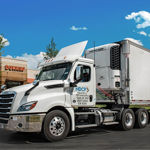
National DCP: Supporting a scalable national supply chain
Accelerating digital transformation and operational savings at a $3 billion supply chain management company

Brau Union Austria: Optimizing route planning for beer logistics
Discover how this distributor standardizes and runs deliveries efficiently with advanced route planning
For more information
Additional resources
ORTEC helps foodservice distribution organizations apply AI-powered decision intelligence to real-world transportation and logistics challenges
Food and beverage distribution: A practical guide to stronger, more efficient delivery operations
Explore the fundamentals, challenges, and strategies shaping modern foodservice and beverage distribution
Smarter planning for foodservice and beverage distribution
See how connected planning helps distributors balance service, capacity, costs, and operational efficiency
Real-time visibility for food and beverage distribution and last-mile logistics
Gain greater control of deliveries with real-time visibility, proactive communication, and exception management
Key trends reshaping foodservice and beverage distribution
Examine the forces influencing distribution, from AI-powered logistics to sustainability and workforce challenges
What can ORTEC help me do?
ORTEC for foodservice and beverage distribution
See how ORTEC helps manufacturers improve transportation performance through connected planning, optimization, and execution.
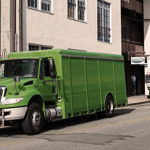
Retail and wholesale distribution solutions
Connect planning, routing, loading, and execution across your distribution operation to improve service and efficiency
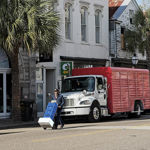
Intercompany Distribution
Optimize inventory movements and replenishment plans across production and distribution networks.